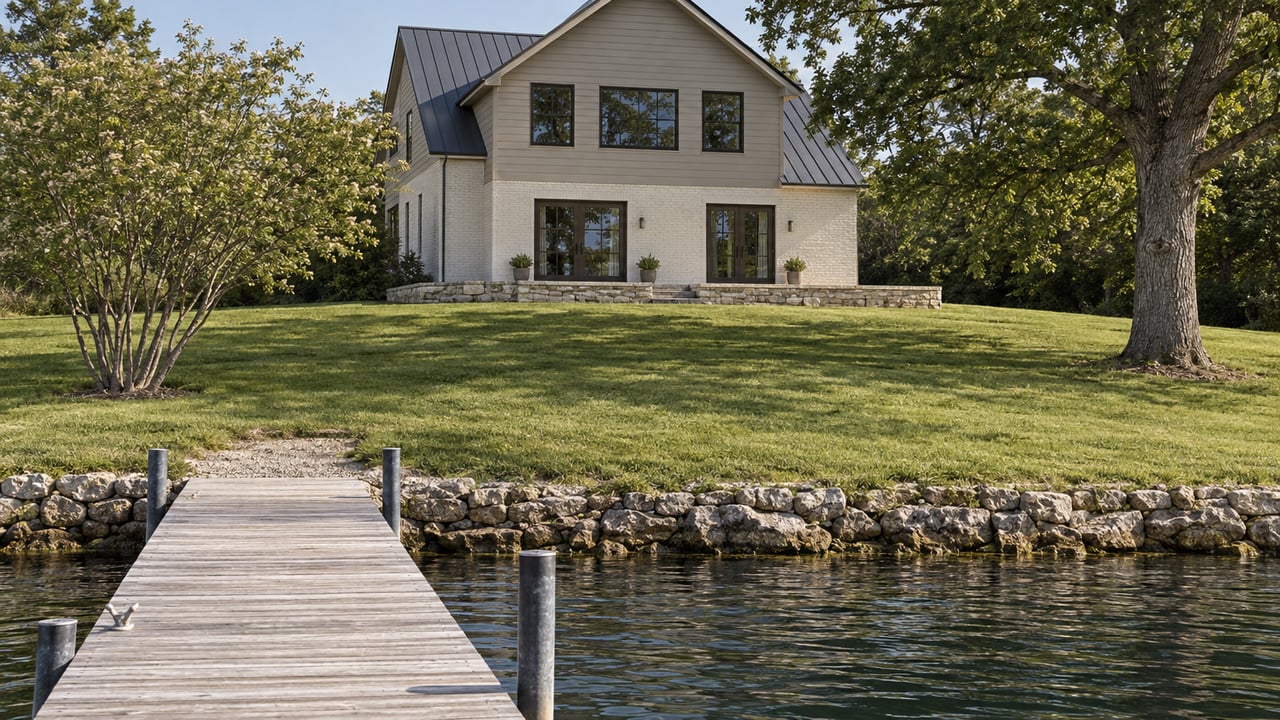
A dock looks like part of the property. It sits at the end of the yard, tied to the same deed, photographed in the same listing as the kitchen and the primary suite. On Fort Loudoun Lake and Tellico Lake around Lenoir City, it isn't.
This catches people off guard more often than the inspection or the appraisal, because nothing about the transaction signals it. The seller has used the dock for fifteen summers. The listing shows it in every photo.
The Permit After Closing
Every dock, pier, or boathouse on Fort Loudoun and Tellico Lake exists under Section 26a of the TVA Act, the federal rule that governs construction along the Tennessee River system. The permit itself is not a blanket approval for "a dock." It names a specific applicant, a specific structure, and a specific location, and that name is what stops transferring the moment title changes hands.
The new owner has to reapply. TVA's own guidance on buying and selling waterfront property states that permits do not automatically transfer with property ownership, and the new owner is required to apply for a Section 26a permit within 60 days of closing. The Tellico Village Property Owners Association spells out the same requirement for its own communities in its buyer and realtor information letter: when a property transfers to a new owner, that owner must apply for a boat dock transfer permit with TVA before the dock is legally theirs to use.
The office reviewing that application isn't a distant federal building. The TVA watershed team responsible for Fort Loudoun, Tellico, and Fontana reservoirs keeps its offices on Highway 321 North, right in Lenoir City, a detail worth knowing if a transfer application stalls and a phone call becomes more useful than another email.
A dock is not a fixture in the way a fence or a garage is a fixture. It is a federal permit standing in for one, and permits are personal, not attached to the land.
The Line That Still Draws Trouble
Most of the older docks on these two lakes predate the modern rulebook. TVA's Shoreline Management Policy took effect November 1, 1999, and anything built and permitted before that date generally keeps its footprint even when the current standards would not allow the same design from scratch. That's what people mean when they call a dock grandfathered.
Grandfathering protects the structure. If a modification was never separately approved, TVA can require it be brought into compliance or removed.
The eCFR sets hard numbers on how big a new structure can be, and where the preexisting-development line falls:
| Facility type | Maximum footprint |
|---|---|
| Standard water-use facility | 1,000 square feet |
| Facility in an area of preexisting development (recorded before Nov. 1, 1999, with at least one prior TVA-permitted facility in the subdivision) | 1,800 square feet |
A buyer looking at an older dock on Tellico Lake should ask a narrower question than "is this grandfathered." The better question is whether everything currently standing on the shoreline matches the drawings TVA has on file for that specific permit number, because the gap between the two is where a future violation notice usually starts.
What "Dockable" Actually Costs You
Current listings around Tellico Village make the distinction plain once you know to look for it. Some describe a lot as having a TVA-approved dock permit already in place, meaning the structure is built, reviewed, and simply waiting on the transfer application after closing. Others describe a property as fully dockable per TVA regulations, which means no dock exists yet and the buyer is the one who will carry a fresh application through TVA's review from scratch. A smaller set of listings carry no dock path at all, where "lake access" means a walk to the water rather than a private slip.
Those three categories aren't interchangeable, even when the view from the porch looks identical. A permitted, transferable dock removes months of uncertainty from the buyer's plans. A merely dockable lot hands that uncertainty to whoever closes next, along with the application fee and the waiting period. Buyers comparing two otherwise similar lakefront properties are often comparing which one already carries a resolved permit and which one is asking them to gamble on TVA's review timeline before they can put a boat in the water they just bought.
Before You Write the Offer
A few checks, done during due diligence rather than after closing, cover most of what goes wrong:
- Ask for the actual Section 26a permit on file, not a verbal assurance that the dock is grandfathered.
- Confirm the permittee of record matches the current seller's name.
- Walk the shoreline against the permit drawings. Anything built beyond what's on paper, an extra slip, a covered second story, a longer walkway, is the detail most likely to surface as a compliance problem later.
- Check the current application fee directly through TVA's online permit portal before budgeting for it. The portal itself notes that fees change from time to time, so a number quoted a year ago isn't a safe number to write into a closing estimate today.
- If the property sits inside an association like Tellico Village, ask whether the POA has its own transfer notification requirement layered on top of the federal one. Some communities do.
None of this is complicated once it's on the checklist. It's the kind of thing that only becomes a problem when nobody thought to ask, and a closing calendar has less patience for surprises than a due diligence period does.
A Few Questions Worth Settling Early
Does the 60-day clock start at closing or at recording? TVA's guidance ties the window to closing on the property, so the safer approach is to submit the transfer application as soon as the deed changes hands rather than waiting for recording to show up in county records.
What if the seller never permitted the dock in the first place? An unpermitted structure doesn't become the new owner's problem to ignore. It becomes the new owner's problem to fix, since TVA can require removal or modification regardless of who built it or when.
Does this apply the same way on Fort Loudoun as it does on Tellico? Both reservoirs fall under the same TVA watershed office and the same Section 26a rules, so the transfer requirement, the 60-day window, and the grandfathering test all apply identically on either lake.
A lakefront closing on Fort Loudoun or Tellico has one more moving part than a closing on a street with no water view, and it's a federal one rather than a local one. Knowing which category a specific dock falls into before an offer goes in is the difference between inheriting a resolved permit and inheriting somebody else's unfinished paperwork.
If you're weighing a lakefront purchase or sale on Fort Loudoun or Tellico Lake and want a clear read on what a specific dock's paperwork actually looks like before you commit to a price, Pam Owen has spent years walking Lenoir City buyers and sellers through exactly this kind of detail.
This article is general information, not legal, tax or financial advice. Consult a qualified professional about your situation.