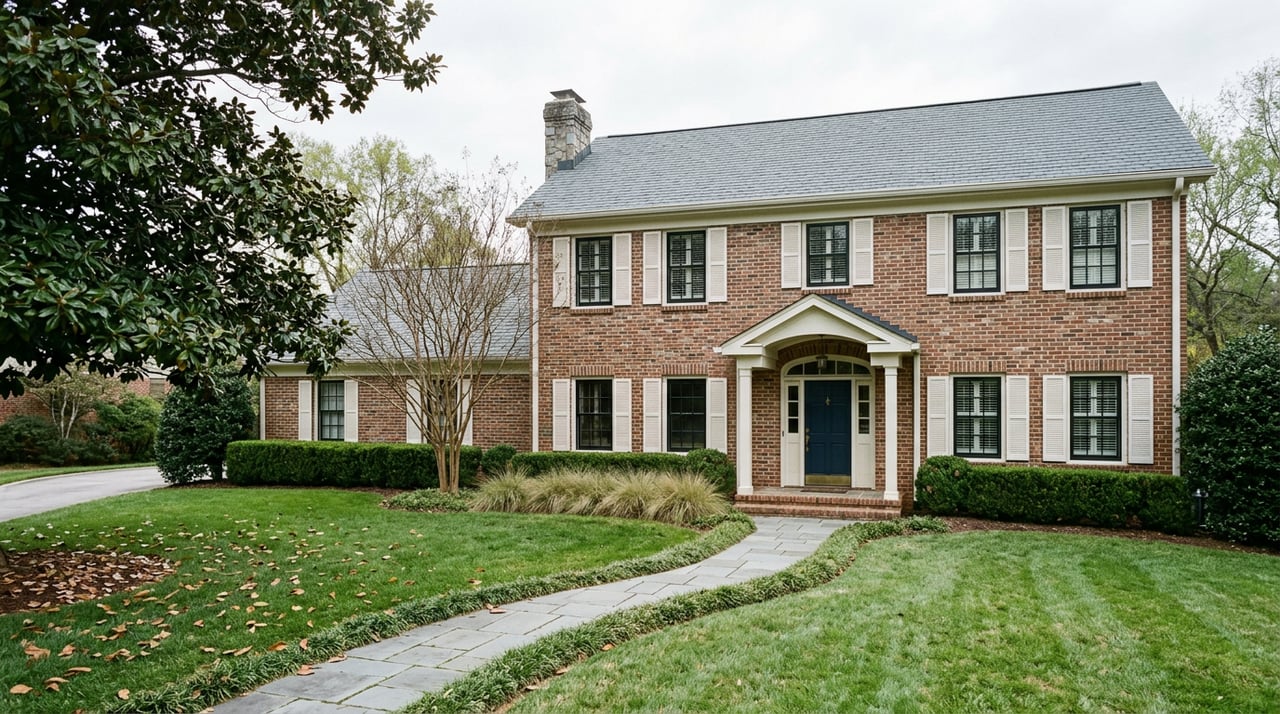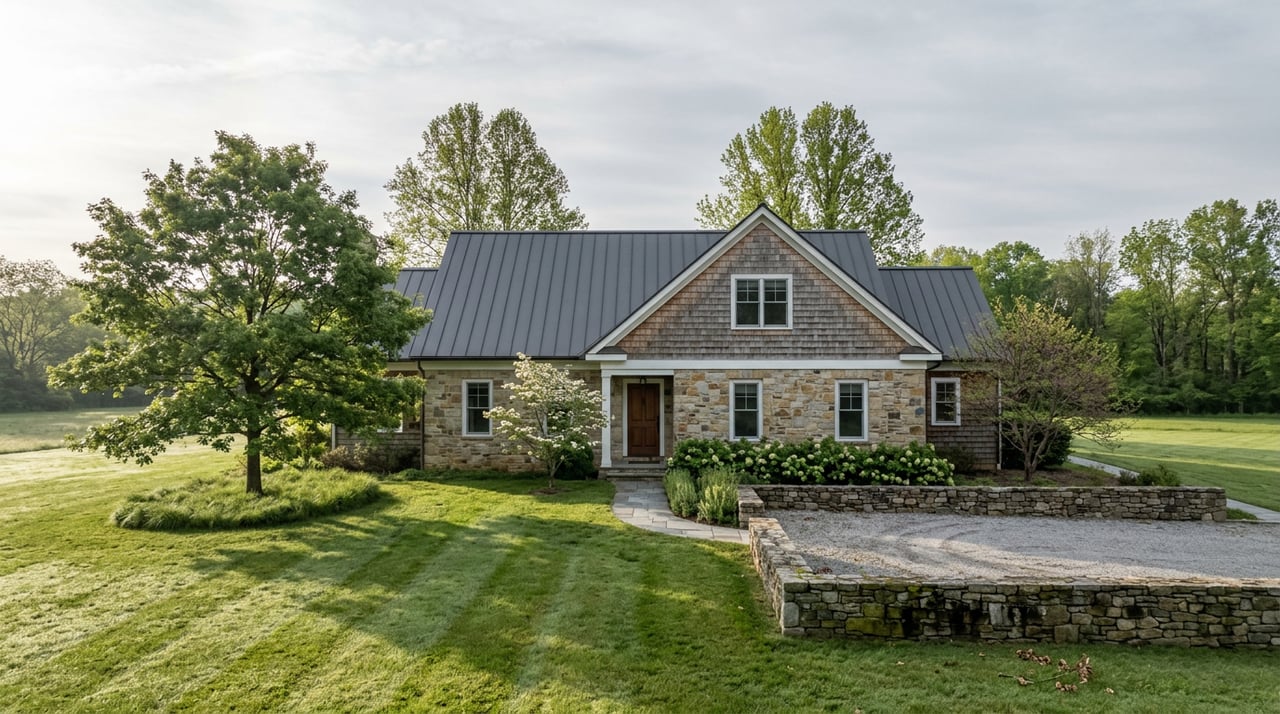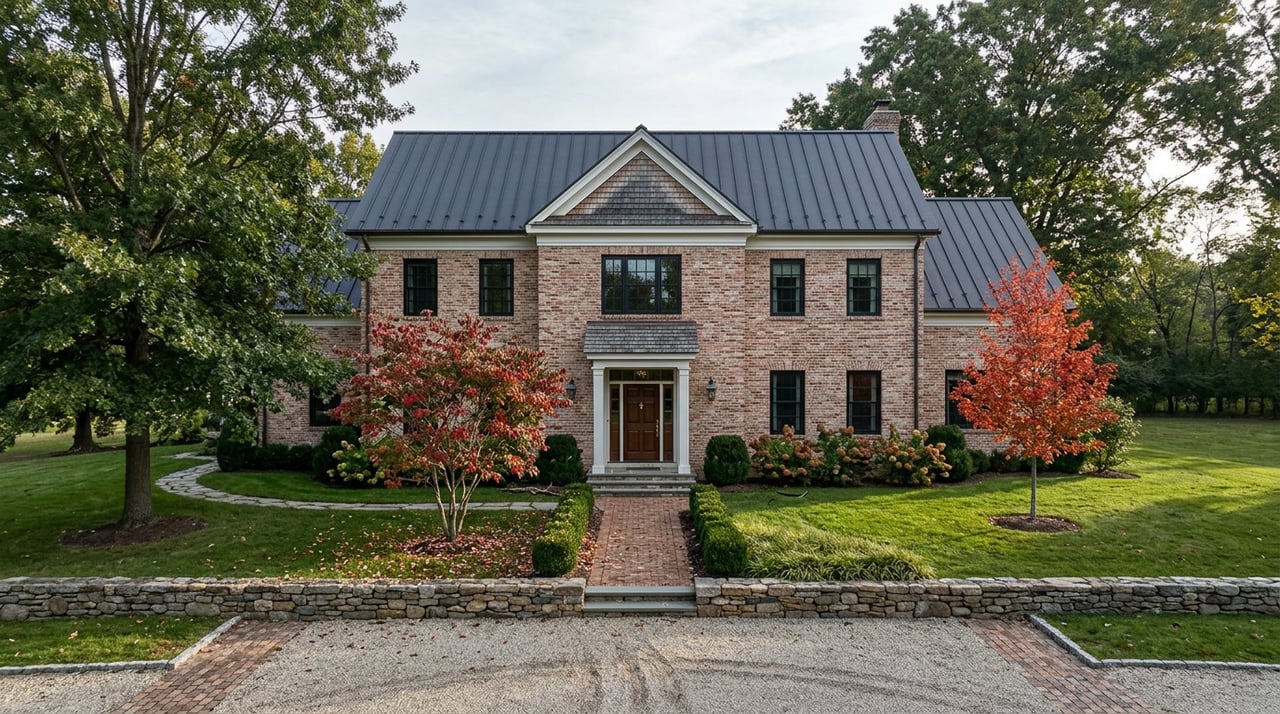
What does it actually mean when a listing near Maryville says a property has "approved septic for a 3 bedroom home," but the floor plan shows four? It's not a typo, and it's not a marketing choice. It's a legal ceiling written into a state permit, and it exists whether or not anyone points it out to you before closing.
Most buyers treat "Maryville" as a single, coherent housing market. In practice, a Maryville mailing address can sit on either side of a boundary that has nothing to do with the ZIP code and everything to do with which pipe your wastewater flows into. On one side, city sewer, standard permitting, and Maryville City Schools. On the other, a private septic system with a state-capped bedroom count, extra disclosure paperwork, and a different school district assignment. The address doesn't tell you which one you're buying. The parcel does.
Where The City's Sewer Line Actually Stops
Maryville's Water and Sewer Department runs the municipal system inside city limits, and Alcoa's utility crews cover a wide adjoining service area that extends south to Maryville's city limits and east into the Wildwood and Nails Creek communities. That's a meaningful stretch of ground served by two different municipal systems, but it isn't unlimited. Head further out toward Rockford, Louisville, Walland, or Friendsville and you're in territory where septic tanks, not sewer mains, handle every household's wastewater. Local home inspectors describe their Blount County coverage the same way: new subdivisions off Lamar Alexander Parkway sit alongside historic homes near downtown Maryville and Maryville College, with lake and mountain properties toward Louisville, Friendsville, Walland, and Townsend rounding out the territory. Those aren't interchangeable categories. They're different plumbing systems, different permitting rules, and different maintenance obligations, all sold under the same "Maryville" heading on a listing site.
If you're comparing a walkable in-town lot against a larger parcel on the western edge toward Louisville or Rockford, this is the first thing to check, not the last. The Maryville Water and Sewer Department can confirm whether a specific parcel sits inside the service area before you write an offer.
The School Boundary Doesn't Follow The County Line Either
Here's the second surprise hiding in the same geography. Maryville City Schools is an independent district, and its boundary follows the city limits, not Blount County's borders. A buyer who assumes every home with a Maryville address feeds into the same school system can be wrong in either direction. Cross out of city limits, even by a short distance, and the assigned district changes to Blount County Schools. This isn't a claim about which system is better. It's a jurisdictional fact that catches people off guard because the city limit line rarely shows up on a listing photo or a real estate ad. If school assignment matters to your decision, confirm it against the actual parcel, not the mailing address.
What A Septic Permit Actually Caps
This is where the friction gets expensive if you miss it. Tennessee law, under Tenn. Code Ann. § 47-18-104(b), prohibits sellers of newly constructed homes on a septic system from marketing more bedrooms than the septic permit allows. The permit sets a hard number based on the drain field's capacity, and that number doesn't automatically increase just because someone finishes a bonus room or converts a den into a fourth bedroom.
The practical effect shows up at exactly the wrong moment: during underwriting. Appraisers and lenders reconcile a home's marketed bedroom count against its septic capacity, and a mismatch can stall the loan or trigger a re-inspection before closing. If you're buying a property where the septic system was permitted for three bedrooms but the house shows four, that's not a cosmetic detail. It's a ceiling on how the home can be legally described, financed, and eventually resold, regardless of how the space is currently used.
City Sewer Versus Private Septic, Side By Side
| Inside City Sewer Service | Private Septic (County) | |
|---|---|---|
| Connection | Municipal line, city-maintained | State-permitted system, owner-maintained |
| Bedroom count | Set by floor plan | Capped by septic permit (Tenn. Code Ann. § 47-18-104(b)) |
| Required disclosure | Standard Tennessee property disclosure | Adds percolation test results, exterior injection wells, and PUD covenants |
| Typical inspection cost | Standard home inspection, roughly $200 to $350 locally | Home inspection plus a separate septic inspection, often around $400 with added digging fees of $25 to $45 per foot |
| Maintenance responsibility | City crews handle mains | Owner schedules pumping, typically every five years or so per local septic providers |
The dollar difference is real, but the bigger cost is the paperwork most buyers don't know to ask for until an inspector brings it up mid-transaction.
The Disclosure Form Is Doing More Work Than It Looks Like
Tennessee's Residential Property Disclosure Act requires sellers to disclose specific items that only apply to certain properties, and septic and rural parcels carry more of them. Under Tenn. Code Ann. § 66-5-212, sellers must disclose known percolation test or soil absorption results, the presence of any exterior injection well, and any known sinkholes. Under § 66-5-213, if the property sits inside a Planned Unit Development, sellers must disclose that status and provide the development's restrictive covenants and bylaws if asked. None of this is a warranty. The disclosure form tells you what the seller knows, not what an inspector will find, which is exactly why an independent septic inspection matters even when the seller's paperwork looks clean. The Tennessee Department of Health's own guidance on septic systems makes the same point: the disclosure law and a professional inspection serve different purposes, and skipping one to rely on the other leaves gaps.
Before You Write An Offer On A Septic Property Near Maryville
- Confirm whether the parcel sits inside Maryville's city limits or Alcoa's service area, not just whether the mailing address says Maryville.
- Request the septic system's permit record and compare the approved bedroom count against the home's actual layout.
- Ask for the septic pump and inspection history, and budget for an independent septic inspection separate from the general home inspection.
- Check the seller's disclosure specifically for percolation test results, any exterior injection well, and PUD covenants if the property is in a planned development.
- If school assignment is a factor in your decision, verify it against the parcel's actual jurisdiction rather than assuming based on the address.
- For acreage or new construction, confirm the septic permit matches the number of bedrooms you plan to build or finish, not just what exists today.
A Few Questions Worth Settling Early
Can a septic system near Maryville be converted to city sewer later? Sometimes, but it depends on how close the parcel sits to an existing city or Alcoa line, and it typically requires city approval and connection fees. A Maryville mailing address alone doesn't guarantee access.
How often does a septic tank actually need to be pumped? Local septic providers in the area generally recommend pumping every five years under normal household use, though usage and tank size can shift that timeline.
Does the septic permit's bedroom cap really affect financing? Yes. Lenders and appraisers check that a home's marketed bedroom count aligns with what the septic system is permitted to support, and a mismatch can slow down or complicate underwriting.
The line between city sewer and private septic, and the separate line for school assignment, don't show up in a listing description. They show up in county and city records, in permit files, and in the questions a buyer knows to ask before the inspection period closes. If you're comparing homes in downtown Maryville against something on the western edge toward Louisville or Rockford, that difference is worth understanding before you fall in love with a floor plan a septic permit won't support.
If you're weighing a property like this and want someone to walk the parcel-specific details with you before you write an offer, Pam Owen has spent years working exactly this kind of Blount County transaction. You can also browse the Maryville neighborhood guide for a broader look at the area, or get a free home valuation if you're on the selling side of one of these properties and want to understand how its systems affect its market position.